
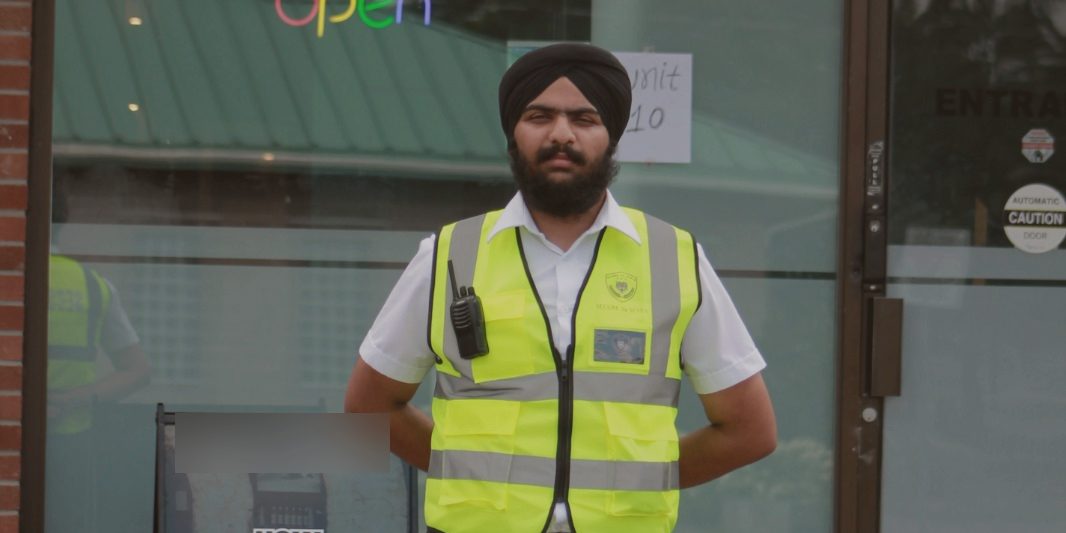
Retail Security Guards in Toronto & Loss Prevention for GTA Stores
Shrink rarely has one cause. We look at how product actually leaves your store — through the front door, the fitting rooms, the till and the back dock — and place licensed guards where they change the outcome.
What a retail security guard does for a Toronto store
Secure 24 Seven supplies PSISA-licensed retail security guards and loss-prevention staff to stores, plazas and grocery locations across Toronto and the GTA. Guards work from written post orders built around your floor plan, deter theft through a visible presence or observe discreetly in plain clothes, support staff when a situation turns tense, and file digital incident reports with photos after every shift.
Our team’s background is in corporate asset protection, so the advice you get is shaped by what works on a real sales floor — not just by what fills a schedule.
Five streams feed the same number on your inventory report
The mix is different in every store, which is why the bar below is drawn evenly. During your free assessment we work out which segments are widest for you.
Five points on the floor where a guard earns their shift
Every post order we write starts with a sketch like this one. The dotted line is the patrol loop; the numbered points are where the guard slows down.
-
1
Entrance & exit
The first impression and the last chance. The guard greets every customer, which tells honest shoppers they are welcome and tells anyone else they have been seen. Push-outs and grab-and-runs are watched for, described and reported — not chased into traffic.
-
2
High-value aisle
Cosmetics, razors, electronics, liquor, infant formula — whatever your lines are. The guard varies the timing of passes so the aisle never feels unwatched, offers help to lingering shoppers, and notes repeat faces for your team.
-
3
Fitting rooms
A blind spot by design. Guards support the item-count routine, check rooms between uses when staff are stretched, and collect discarded tags and packaging as evidence of a pattern rather than ignoring it.
-
4
Cash & service desk
Line-ups, refunds and cash pickups are where pressure builds. A guard nearby calms tense exchanges, watches for return fraud and keeps an eye on the drawer during shift changes.
-
5
Stockroom & back dock
The door customers never see. Guards check that it stays closed, observe deliveries against the paperwork, and log who goes in and out after closing.
Visible deterrence or plain-clothes loss prevention?
Uniformed guard
- The aim
- Prevent the attempt. A clearly marked guard changes the risk calculation before anything leaves a shelf.
- Works best for
- Busy entrances, late hours, stores with frequent confrontations, plazas and grocery.
- On shift
- Door presence, greeting, floor walks, staff escort at closing, support during refusals and trespass requests.
- What you see
- Fewer attempts and calmer staff — the incidents that never happen.
- Trade-off
- Determined groups may simply wait for the guard to move away or try another entrance.
Plain-clothes LP
- The aim
- Understand the loss. A discreet associate observes how, when and by whom product is being taken.
- Works best for
- Repeat losses on specific lines, suspected organized activity, stores where the pattern is unclear.
- On shift
- Quiet observation, detailed notes and photos, identifying repeat visitors, briefing management.
- What you see
- Evidence — times, methods and descriptions you can act on with police or head office.
- Trade-off
- Less deterrence on the floor; it pays off through what it uncovers, not what it scares away.
Many stores run both: a uniformed guard at the door and a plain-clothes associate on the days losses peak. Either way, every person we send is PSISA-licensed and works from the same written post orders. See how our wider security guard services are scheduled.
Merchandise can be replaced. Your cashier can’t.
The Retail Council of Canada has warned that retail theft is becoming more violent, and frontline staff feel it first. Our guards are trained to lower the temperature: calm voice, open posture, a clear exit for everyone, and no physical confrontation over product.
Ontario law does give occupiers and the people they authorize some tools — the Trespass to Property Act lets them direct someone to leave and prohibit their return, and the Criminal Code allows a property owner’s agent to arrest in narrow circumstances, with the person handed to police right away. We use those tools only within your company policy and only when it is safe. Many retailers choose a no-chase rule, and we respect it.
Banning a repeat visitor
- A written trespass notice that names the person and the premises it covers
- A copy kept on file with a photo and description for every shift
- Never based on grounds protected by the Ontario Human Rights Code
- Every return logged and reported, with police called when needed
- Step 1Be seenPresence and a greeting resolve most situations before they exist.
- Step 2Offer service“Can I help you find something?” — a polite interruption, never an accusation.
- Step 3Ask, don’t grabA calm request to pay for or return an item, with space to step away.
- Step 4Disengage & recordIf it escalates, staff safety wins: let it go, note the description, direction and time.
- Step 5Involve policeCall 9-1-1 for threats or weapons; file the photo report for follow-up.
Retail security FAQs
- Is a guard worth it for a single store, or only for chains?
- Independent stores often feel losses more sharply because there is no regional budget to absorb them. A guard on your highest-risk days or hours — rather than every shift — is a common starting point, and the free assessment helps you pick those windows. Pricing depends on hours, days and whether you need uniformed or plain-clothes coverage.
- Will a guard stop shoplifters physically?
- Our default is deterrence, observation and reporting, not physical intervention. Ontario law permits limited action by a property owner’s authorized agent, but we only act within your company’s policy and when it is safe for staff and customers. Product is never worth an injury.
- Can you cover only evenings, weekends or the holiday season?
- Yes. Coverage can be scheduled for closing hours, weekends, boxing-week peaks or a temporary spike in incidents, and adjusted as the pattern changes. We are available 24/7/365, and urgent requests can usually have a guard on site in about 30–60 minutes depending on travel.
- What reporting will I receive?
- Every shift produces a digital report, and incidents get their own report with photos, times and descriptions. Over a few weeks those reports show which hours, aisles and methods are costing you — the information you need to decide on staffing, merchandising or camera changes.
- Can guards work alongside our cameras?
- They should. Guards can respond to what staff see on in-store monitors, and remote CCTV & video monitoring can watch the store after hours. Combining both gives you eyes on the floor during trading and coverage overnight.
Let us walk your floor before you buy a single shift
We map your entrances, high-value lines, fitting rooms, tills and dock, then recommend uniformed, plain-clothes or combined coverage — with the reasons written down.
Related technology
Retail Security Quote
Tell us about your site and the coverage you need — we’ll get back to you quickly.