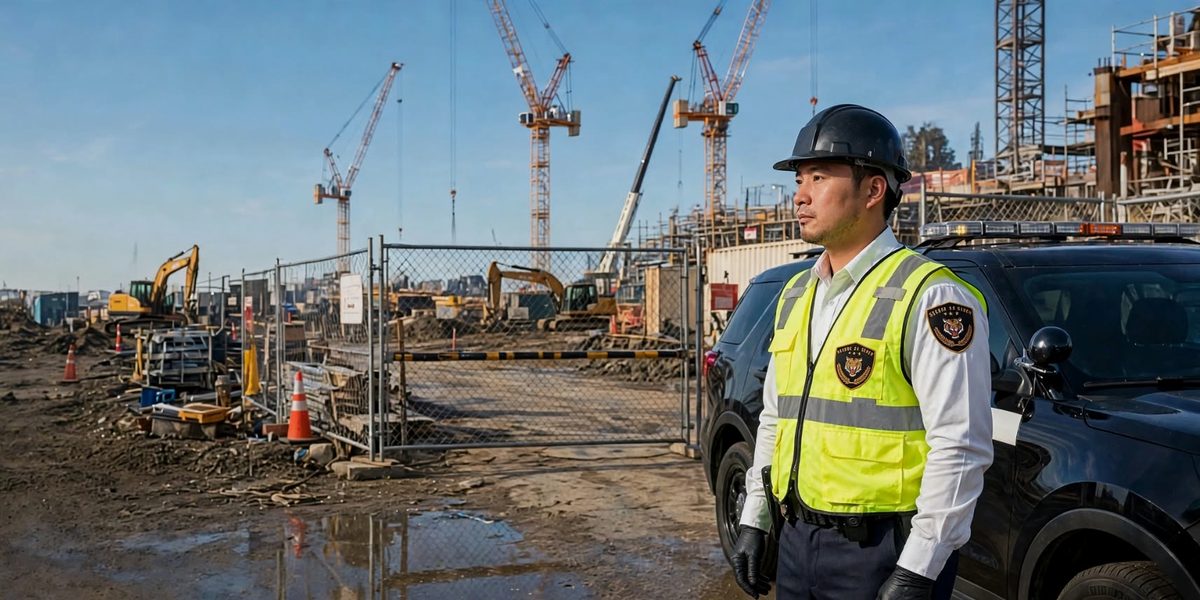
Security guard in a hard hat and high-visibility vest on a construction site with tower cranes behind

Feature · Construction

How to Stop Construction Site Theft in the GTA

By Secure 24 Seven Team 8 min read Updated October 2026

Thieves do not pick construction sites at random. They pick the ones that look easy: loose fencing, keys left in cabs, copper stacked by the gate, and nobody around after 6 p.m. Stopping construction site theft in the GTA means making your site the harder target, with layers that work together rather than one expensive fix.

Key takeaways

  • 01Insurance-industry data names Toronto among Canada’s hotspots for heavy equipment theft, with skid steers and mini excavators taken most often.
  • 02Copper wire and pipe, appliances, lumber and power tools are the everyday losses on GTA builds.
  • 03Layer your defences: site planning, perimeter, asset control, detection, people, then response.
  • 04Guards and patrols matter most in the riskiest windows: nights, weekends, long weekends and the weeks before handover.

Why GTA sites are a target

The Greater Toronto Area has some of the busiest construction activity in the country, from downtown towers to subdivisions spreading through Peel, York and Halton. Every active site is a temporary warehouse with a chain-link wall, and most sit empty every night and weekend once crews go home.

Équité Association, the insurance industry’s anti-fraud and crime body, reported that about $124.6 million worth of heavy equipment was stolen in Canada between 2019 and 2023, and that less than a quarter of it was recovered. Its findings named Toronto alongside Edmonton and Calgary as hotspots, and noted that equipment theft rose in 2023 as demand for machinery outpaced supply. Skid steers and mini excavators were the most commonly taken machines: compact, valuable and easy to trailer away.

Police investigations show how organized some of this activity is. York Regional Police reported recovering more than a million dollars’ worth of stolen construction equipment from a Toronto retail store, following a series of break-ins at warehouses and construction wholesalers.

What actually disappears

Heavy machinery makes headlines, but day-to-day losses are smaller and more frequent. The Ontario Home Builders’ Association has described copper wiring and piping, installed appliances, furnaces, fireplaces, light fixtures, lumber and tradespeople’s tools as common targets. Copper is attractive because it can be sold for scrap; finished items are attractive because they can be resold quickly. Fuel, generators, compressors and site-office electronics round out the list.

The bigger cost is often time. A stolen furnace or stripped wiring means reordering and rescheduling trades; one builder told the OHBA that a furnace ripped out of a house can delay a closing by two weeks. Deductibles and buyer frustration follow.

The goal is not an impenetrable site. It is a site that costs a thief more time, more noise and more risk than the one down the road.

Secure 24 Seven field principle

The layers of protection

Security professionals think in layers because any single measure can fail. A camera with no one watching records a theft; a fence with an unlocked gate is decoration; a guard with no lighting cannot see the back of the lot. Each layer below buys time for the next one to work.

Pyramid of six layers of construction site protection, from site planning at the base to response and reporting at the top L1SITE PLANNINGLayout, deliveries, housekeeping L2PERIMETERFencing, gates, lighting, signs L3ASSET CONTROLKeys, marking, GPS, inventory L4DETECTIONCameras, alarms on containers L5PEOPLE ON SITEGuards and mobile patrols L6RESPONSE & RECORDWho acts, and what is logged
Site planningKeep high-value materials off site until needed, store them away from the fence line, and clear the empty cartons and debris that hide stolen goods.
PerimeterContinuous fencing you can see through, as few gates as practical, lighting on storage areas and trespass signage at every entrance.
Asset controlRemove ignition keys, log who holds keys, mark tools and machines, record serial numbers and fit GPS trackers or immobilisers.
DetectionCameras covering gates, compounds and the material yard, plus alarms on trailers and sea containers that someone actually answers.
People on siteLicensed guards at the gate or on overnight rounds, or scheduled mobile patrol visits that are hard to predict.
Response & recordA clear plan for who is called, how fast someone attends, and dated reports with photos for police and insurers.

Layers one and two: make the site hard to read and hard to enter

Most theft starts with someone looking in. Chain-link or open-mesh fencing lets passing patrols, police and neighbours see into the yard. Limit access to one or two gates, lock them every night and weekend, and give the gate area the best lighting on site. Motion-activated lights on storage areas are a sensible complement where full lighting is impractical.

Signage is not just a deterrent. Under Ontario’s Trespass to Property Act, a sign or a marking showing that entry is prohibited can serve as notice, and trespass convictions can carry fines of up to ten thousand dollars. Clear notices at each gate make it easier for guards and police to deal with people who should not be there.

Layer three: control the things worth stealing

Equipment manufacturers, insurers and police give similar advice: never leave keys in machines, lock cabs and fuel caps, and fit GPS tracking or immobilisers to the machines most at risk. Engrave or paint company identifiers on tools, photograph serial numbers, and keep a current inventory so you can tell police exactly what is missing. Assign one person to receive and check every delivery, and schedule copper, appliances and fixtures to arrive just in time rather than sitting on site over a weekend.

Free site walk

We will find the weak layer on your site before a thief does.

Layer four: cameras that lead to action

Recorded footage helps after the fact, but it rarely brings anything back on its own. Cameras deliver the most value when someone is alerted in real time and can respond, whether that is a remote monitoring operator issuing a warning or a patrol unit dispatched to the gate. Position cameras on the entrance, the compound and the material yard, and protect the recorder itself so it cannot be carried off with the tools.

Layer five: people, at the right hours

Licensed guards are the layer thieves find hardest to plan around, because a person can notice, challenge, call for help and adapt. On most GTA builds the riskiest windows are predictable: overnight, weekends, statutory long weekends, the holiday shutdown and the weeks before occupancy when finished fixtures are installed but owners have not yet moved in. A guard posted at the gate during those windows, supported by mobile patrol visits at irregular times on quieter nights, covers the gaps without staffing every hour of the year.

Whoever is on site needs written post orders: which gates to check, which containers to test, who to call and what to photograph. Our construction security teams work from site-specific orders and file digital shift and incident reports with photos.

Layer six: response and record

Decide in advance who is called when something happens, at what hour, and who meets police. Keep dated photos, inventory sheets and reports in one place. Builder’s risk policies commonly cover theft of materials and equipment, but claims move faster when you can show what was there, when it was last checked and how it was secured.

A Friday-afternoon copper delivery and a long weekend with nobody on site is the most expensive combination on a GTA build.

From our site assessments

Print & post in the site office

Construction site security checklist

SiteDateChecked by

Every evening

  • All gates chained and locked; keys returned to the lockbox
  • Ignition keys removed; cabs and fuel caps locked
  • Machines parked together, buckets down, away from the fence
  • Tools back in gang boxes or containers, padlocked
  • Site lighting and cameras on and recording
  • Units with installed fixtures locked and checked

Every week

  • Walk the full fence line for gaps, lifted panels and cut ties
  • Spot-check inventory of copper, fixtures and small equipment
  • Review delivery schedule; move high-value drops off Fridays
  • Read guard and patrol reports; act on flagged issues
  • Clear cartons and debris piles near the perimeter
  • Confirm long-weekend or shutdown coverage is booked

Each new phase

  • Update the asset register with serial numbers and photos
  • Re-check camera angles as the structure changes sightlines
  • Refresh trespass signs at every entrance
  • Reissue key list; recover keys from departing trades
  • Revise guard post orders for the new layout
  • Confirm insurer requirements for the stage of work

Builders ask us

Question 1

Do I need a guard every night, or are cameras enough?

It depends on what is exposed and how quickly someone can respond. Cameras with live monitoring work well on fenced sites with little loose material; once copper, appliances or fixtures arrive, a guard during nights and weekends usually pays for itself. Many sites move between the two as the build progresses.

Question 2

When is a construction site most likely to be hit?

After hours and on weekends, when nobody is around, and especially over long weekends and the winter shutdown. Risk also climbs late in a project, when finished appliances and fixtures are installed in units that are not yet occupied.

Question 3

What should I do right after a theft?

Report it to police, preserve camera footage, and photograph the point of entry before anything is repaired. Pull your inventory and serial numbers, notify your insurer, and close the gap the same day, because a gap that worked once is likely to be tried again.

Question 4

Can a guard stop someone who is trespassing on my site?

A licensed guard authorized by the property can direct a trespasser to leave, document the incident and contact police, and posted signs make it clear that entry is prohibited. Guards are trained to observe, deter, record and report rather than to put themselves or others at risk.

Protect the next long weekend now

Licensed guards, GPS-tracked patrols and monitored cameras, planned around your build schedule. Emergency deployment is possible in about 30 to 60 minutes depending on travel.

Call Us 24/7

Request a Free Security Quote

Tell us about your security needs — our team will create a custom, affordable protection plan tailored to your site.